Editorial team ·
Break a long episode into chapters listeners can use
Someone wants to hear how the guest checked the figures. The episode is forty minutes long and its only title is “Conversation.” Give that person a place to jump. Use chapters that describe a question, example or correction in ordinary words.
Listen from each jump point after exporting
- Mark the real changes in subject
- Give each section a specific name.
- Keep the context at each start.
- Test the new chapter list
- Open the final export at every marker.
- Update notes after cuts or corrections.
Choose points where the subject really changes
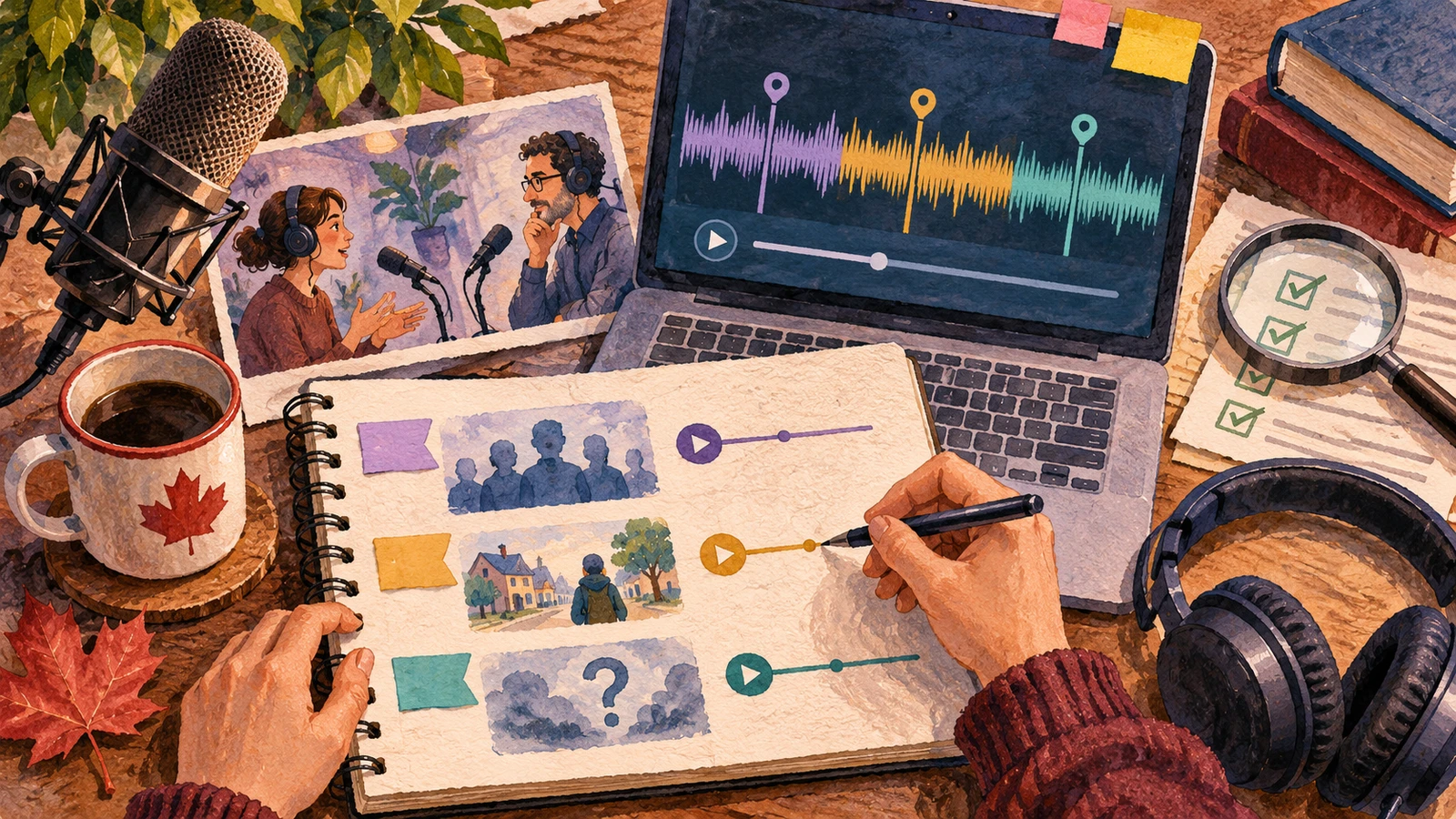
In the fictional episode, the first chapter asks who the study describes. The middle chapter walks through an invented scenario. The last chapter checks what remains uncertain. The labels tell a listener what they will hear.
Avoid putting a chapter break halfway through a statement. Start where a change is introduced, and keep enough of the lead-in to explain the voice or source that follows.
Verify the chapter times against the final audio. A new introduction or correction may move everything after it. Use the same chapter labels in show notes if your listening platform supports a separate chapter list.
Ask someone to find one topic from the list without listening first. If they choose the wrong chapter, revise the label before adding more markers.
| Time | Label | First thing the listener hears |
|---|---|---|
| 00:00 | What the episode checks | The host states the question |
| 08:10 | The invented scenario | Setup and label before the numbers |
| 20:30 | How the sample was counted | Source and method |
| 34:10 | What remains uncertain | Open points and next check |
Questions and answers
- Should I make a chapter every five minutes?
- Use changes in purpose rather than a fixed interval.
- Can I copy times from the script?
- Verify them after editing. Scripts and exports rarely agree down to the second.
- What if a reader uses just the transcript?
- Use the same section labels so the structure still works in text.