Editorial team ·
Sort the interview clips before making your first cut
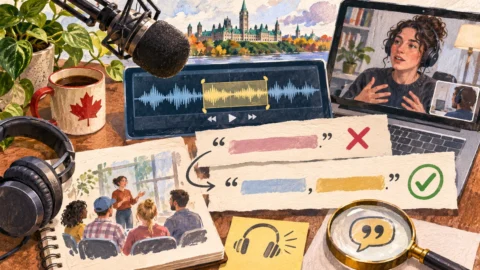
You have twelve clips called “good answer” in a folder. One starts halfway through a thought. Before dragging it into the edit, find the question and the full answer. A strong clip is easier to use when you can tell what it meant in the original conversation.
Name the topic and the speaker
In the fictional interview, the guest answers a question about one small workshop. A strong ten-second quote gives a number. The preceding sentence explains that it counts workshop responses, not all people at the event.
Give each candidate clip the timestamp in the original audio and a short subject. Keep a pointer to the full answer so an editor can hear a qualifier or identify which guest said a line.
Tag clips that need a source check or a privacy review before use. These notes should tell the editor what to verify instead of leaving them guessing from the file name.
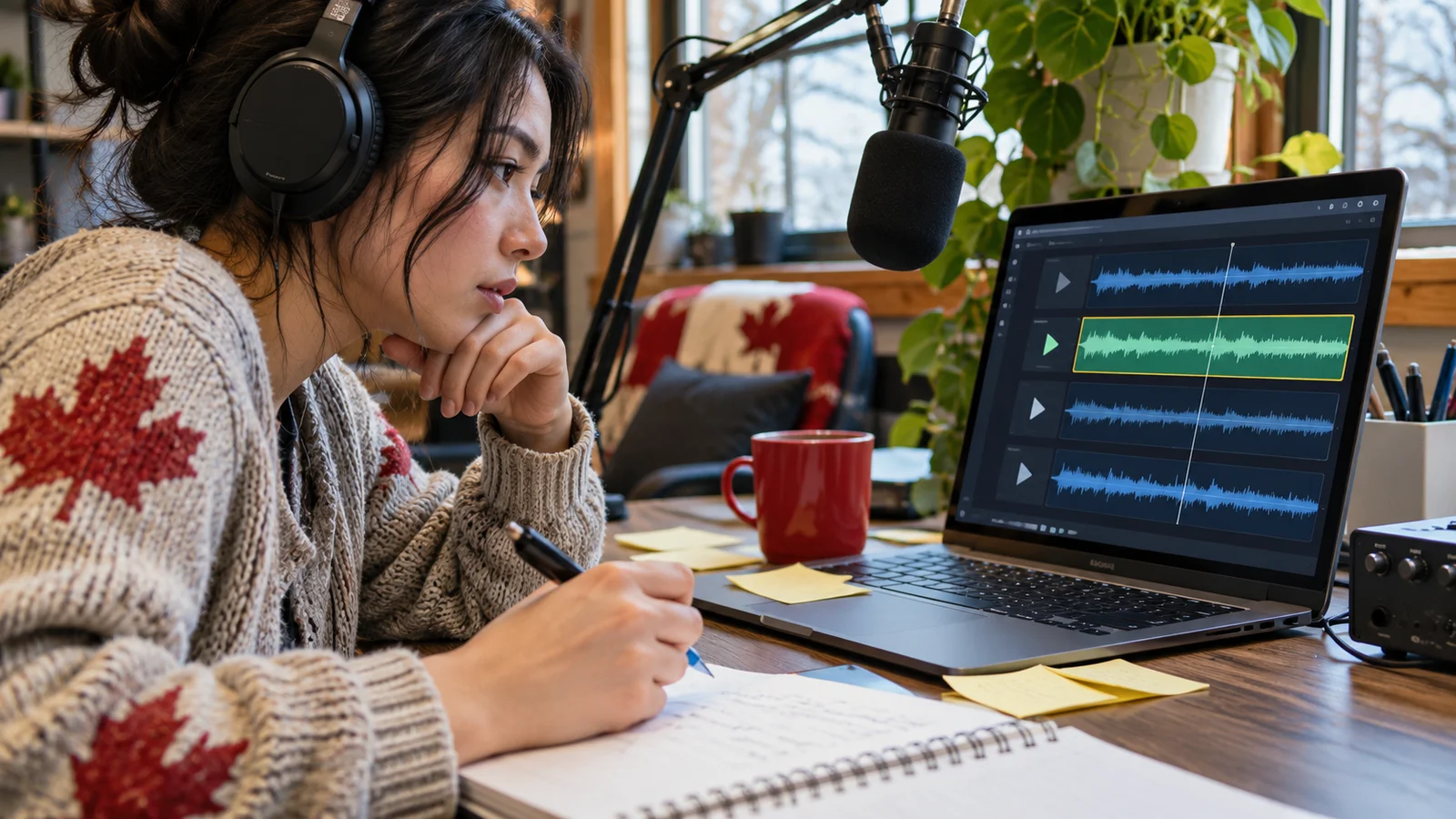
Build the episode with clips attached to the right question. Listen to the new sequence with fresh ears. If a quote now appears to answer a different question, restore context or choose another clip.
| Time in original | Label | Before using it |
|---|---|---|
| 04:12 | Guest describes the workshop | Keep the question or date |
| 04:48 | Guest gives the response count | Retain the sample qualifier and check the figure |
| 12:05 | Guest describes one participant | Confirm permission and identifying details |
Keep the surrounding answer within reach
- Name clips as you review
- Include speaker and original timestamp.
- Keep the source answer linked.
- Mark open review needs
- Verify numbers and context.
- Check permission before using sensitive details.
Questions and answers
- Should I trim every pause immediately?
- Start by identifying the passage and its meaning. Edit timing after you know what needs to stay.
- Can I cut a quote out of order?
- Check that its new placement preserves the answer’s meaning and subject.
- What if I cannot find the original question?
- Find the longer recording before using it as evidence for a specific claim.