Editorial team ·
Correct an audio episode and the places people still listen to it
An episode has been out for two days when an editor notices that the host attributed a survey to the wrong group. Changing a show-note line helps people who read the notes. Anyone who hears the original audio still needs a clear correction.
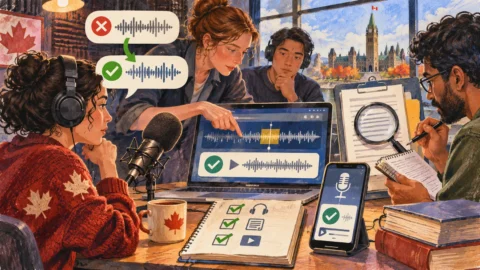
Update the audio, transcript and notes as one release
- Verify the corrected claim
- Read the source and confirm its scope.
- Write a short line that stands on its own.
- Check distribution
- Open the released audio and accompanying notes.
- Update any affected excerpts.
Name the correct detail early
In the fictional example, the survey covered one workshop. The host had described it as covering the whole event. The repair begins with “This survey covered workshop participants.” Then give the affected segment and explain the scope of the change.
If you replace or add to the audio, note the correction date and verify the episode people can actually open. An app may still hold an earlier downloaded copy. Use a visible correction note that makes the revision easy to find.
Check the matching transcript, chapter time and source link. If you distributed a short clip with the inaccurate line, make the correction visible where that clip appeared as well.
Keep an internal record of who checked the source and what changed. The public note can stay short and tell a listener how the revision affects what they heard.
| Place | Change to check |
|---|---|
| Released audio | Accurate scope in a correction or revised passage |
| Transcript | Same wording and time marker |
| Show notes | Dated change and source reference |
| Shared clip | Correction linked or added where the old excerpt appears |
Questions and answers
- Can I edit the audio without a note?
- A dated note helps listeners understand why different versions may be in circulation.
- What if the correction changes the main conclusion?
- Say so clearly in the audio and notes, and update the dependent passages.
- Should I repeat a full inaccurate claim?
- Identify the affected passage and focus on the corrected information.