Prepare an interview about financial uncertainty without guessing for the guest
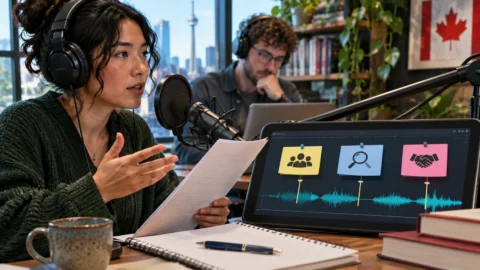
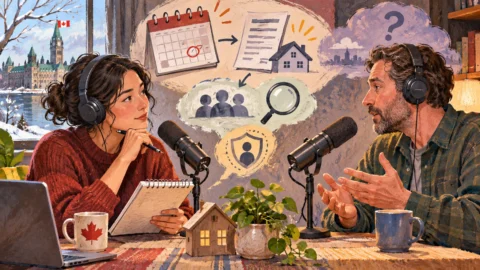
Plan neutral questions about what was known, what might change, and what records can be checked. Use a fictional interview to prepare the prompts.
Plan neutral questions about what was known, what might change, and what records can be checked. Use a fictional interview to prepare the prompts.
Write a short note that identifies an illustrative example or a limit in coverage. Keep it close to the relevant part and distinguish it from disclosure.
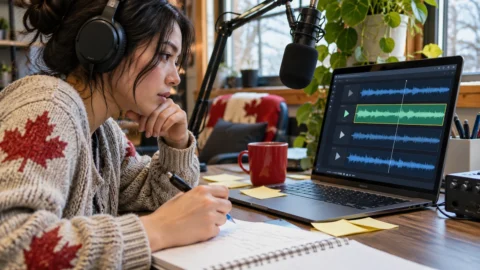
Turn a long conversation into a few labelled sections with useful timestamps. Check the final edit from each chapter’s starting point.
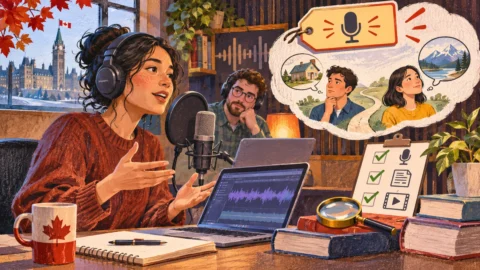
Place a short fictional-scenario cue before an audio example. Keep it with the transcript, clips and show notes so readers can tell which details are real.
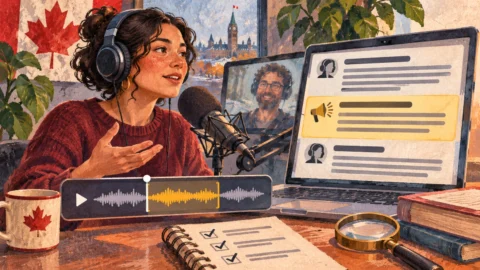
Give a dense episode a short summary, clear chapter cues, and source links tied to the points they support. Keep corrections easy to find.
Mark the start, source and end of an invented paid segment. Check the transcript alone and preserve the label if the excerpt is shared.
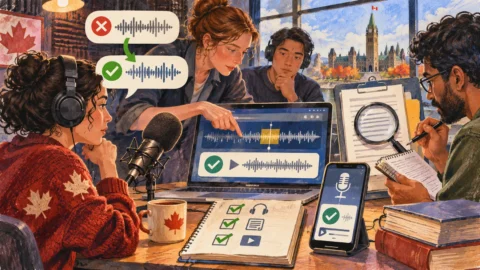
Label clips by speaker, question and time, then keep each quote beside enough context to explain what the guest was answering.
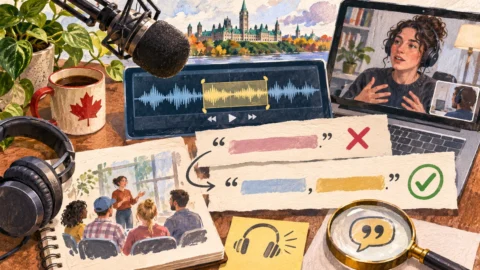
Use a short practice edit to check scope, surrounding words and attribution before publishing a guest quotation or making a standalone clip.
Write a correction that starts with what is accurate, identifies the affected passage, and gives a source without restating a false claim at length.
Choose a few sources for a difficult episode. Tell readers what each one explains, which page to open, and where the article agrees with the audio.