Give listeners a short guide before an episode about risk
Plan a listening guide that names the question, marks an example as fictional, and points to the source behind every important number.
Plan a listening guide that names the question, marks an example as fictional, and points to the source behind every important number.
Give an important figure an audible source cue and add the full reference in show notes. Use one fictional statement to test the timing.
Write a plain spoken disclosure for an invented sponsorship. Connect the paid segment to its transcript label and keep the editorial claims separately sourced.
Use an invented listener story and a small survey result to show how an episode can discuss personal experience without treating it as a general rate.
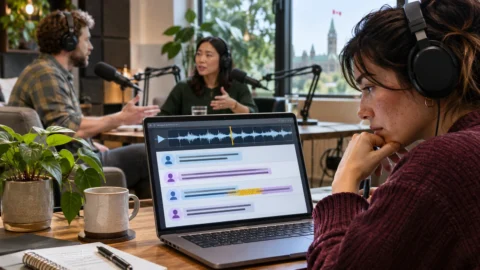
Label the host and guest, check short overlapping turns, and keep the timestamps and meaningful sounds that help someone follow the conversation.
Use an invented decimal price to explain what the number describes. Say the selection, format and time aloud, and keep the calculation distinct from a prediction.
Write a short spoken correction, update the transcript and source note, and keep a dated record of what changed in the episode.
Give two fictional examples the same unit, period and starting conditions. Tell listeners what changes before reciting the results.
Use fictional bookmaker records to check identity, date, region and market before making a comparison. Keep advertising claims and editorial evidence apart.
Write the count, denominator, unit and spoken version together. Use a small fictional tally to catch an error before it reaches the edit.